


Don't let an unexpected cold draft ruin your relaxing evening or drain your bank account; these chills are clear signs that your home is leaking expensive heated air and forcing your HVAC system to work overtime. At Spray Foam Specialists, we combat these inefficiencies with premium air sealing services in Tigard and the surrounding areas, designed to permanently stop energy leaks and protect your indoor air quality. By expertly sealing your home against the elements, we help you lock in consistent comfort, significantly lower your utility bills, and create a healthier, more energy-efficient environment for your family.
Many homeowners underestimate how much air escapes through tiny openings around light fixtures, plumbing vents, and framing connections. These microscopic bypasses act like an open window, allowing conditioned air to escape and unconditioned outdoor air to continuously infiltrate your living space. The cumulative effect of these small leaks is often equivalent to leaving a medium-sized window wide open 24 hours a day, year-round. Professional intervention targets these specific trouble spots to immediately stop the cycle of energy waste.
Effective sealing requires more than just stuffing insulation into visible holes; it demands a systematic approach to identify every thermal bypass hidden behind drywall and flooring. By closing these hidden pathways, you stabilize interior temperatures and reduce the heavy load on your heating and cooling equipment. Sealing cracks and gaps prevents the "stack effect," in which warm air rises and escapes through the attic, pulling in cold, damp air from the crawl space or basement.
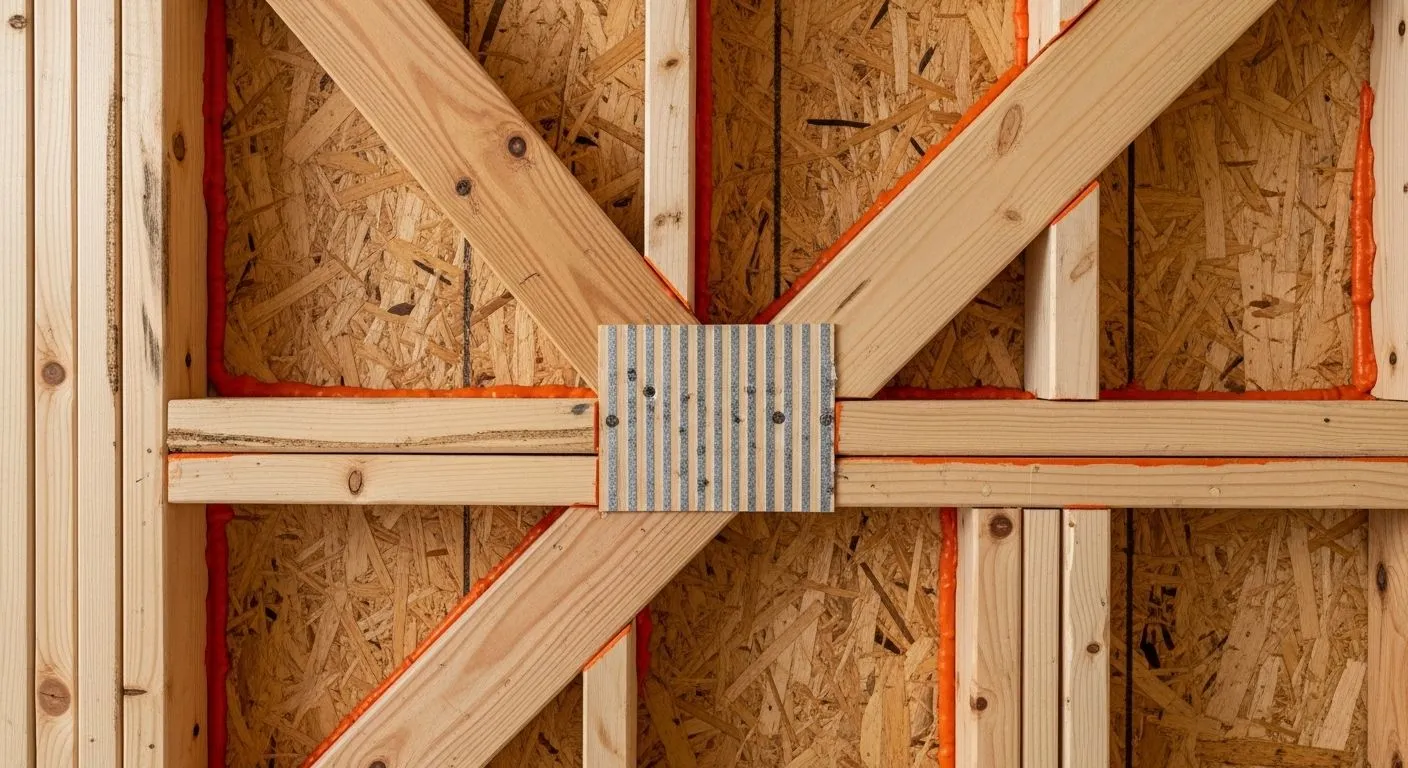
Traditional materials often fail to completely stop airflow, but modern polyurethane solutions offer superior performance by expanding to fill voids of any shape or size. Air sealing with spray foam creates a monolithic barrier that adheres aggressively to building materials, preventing moisture intrusion and blocking pollutants from entering the home. This application forms a durable seal that will not shrink, settle, or degrade over time, ensuring your home remains protected for decades.
Using the correct type of foam is crucial for achieving an airtight building envelope that still allows the home to "breathe" properly through mechanical ventilation. Closed-cell foam provides a rigid, impermeable barrier that adds structural strength, while open-cell foam offers excellent sound-dampening qualities alongside air stoppage. This method effectively turns your home into a thermally efficient envelope, ensuring that the air you pay to heat or cool stays exactly where it belongs.
Investing in a tighter building envelope creates immediate improvements in how your property feels and functions. While energy savings are often the primary motivator, the advantages extend well beyond your monthly utility statement. A properly sealed home is a sanctuary that resists the chaos of the outside world, from noise to allergens.
Key benefits include:
Insulation acts like a thermal blanket, but it cannot perform effectively if wind creates a draft right through it. Combining rigorous air sealing and insulation ensures that the thermal resistance, known as R-value, performs at its rated capacity without being compromised by airflow. According to the EPA, homeowners who air seal their homes and add insulation in attics and floors can save up to 15% on heating and cooling costs (or 11% on total energy costs).
A comprehensive approach addresses both heat transfer and air movement simultaneously for maximum efficiency. While insulation slows down the transfer of heat, air sealing stops the movement of air that carries heat with it. Without the air barrier, fiberglass or cellulose insulation acts merely as a filter, allowing dirty attic air to pass right through into your bedrooms. Treating these two components as a single system guarantees the highest level of performance and comfort.
Every structure has unique vulnerabilities, but heat loss typically concentrates in specific areas, such as the attic floor, basement rim joists, and wall penetrations. Treating the attic prevents the stack effect mentioned earlier, stopping the upward pressure of warm air that drives infiltration. Basements and crawl spaces are also prime targets for sealing to prevent moisture, soil gases, and cold air from rising into the main living areas.
Common application areas include:
The Pacific Northwest is famous for its wet winters and variable temperatures, making moisture management just as important as heat retention. Homes in this region face constant dampness that can lead to mold growth and structural rot if humid air is allowed to circulate through wall cavities and attics. Addressing these specific local conditions prevents costly long-term damage to the building structure that is common in older, leaky homes.
Creating a tight building envelope keeps the notorious Tigard dampness outside where it belongs. This specific attention to regional climate factors ensures that your home remains dry, comfortable, and durable through season after season of heavy rain and shifting temperatures. By controlling air movement, you are also controlling moisture movement, which is the single biggest threat to the longevity of homes in the Pacific Northwest.
Don't let another season pass with money escaping through the cracks in your home. Spray Foam Specialists is ready to transform your living environment with professional precision and high-quality materials. Call (971) 777-7729 or email [email protected] to schedule your assessment.
Caulking is suitable for minor cosmetic cracks, while professional air sealing uses expanding foams and specialized techniques to close large bypasses and structural gaps that are often inaccessible or invisible to the homeowner.
No, a home cannot be "too tight" when properly ventilated; the goal is to stop accidental, uncontrolled leaks and rely on controlled mechanical ventilation to ensure a fresh, filtered air supply.
It significantly improves air quality by preventing allergens, dust, exhaust fumes, and mold spores from entering your living space through wall cavities, attics, or crawl spaces.
Air sealing is highly effective for both new construction and existing homes (retrofitting), with existing homes often seeing the most dramatic improvements in comfort and energy efficiency.
Yes, the density of spray foam and its ability to fill every crevice create an effective sound barrier that significantly reduces outside noise pollution.