

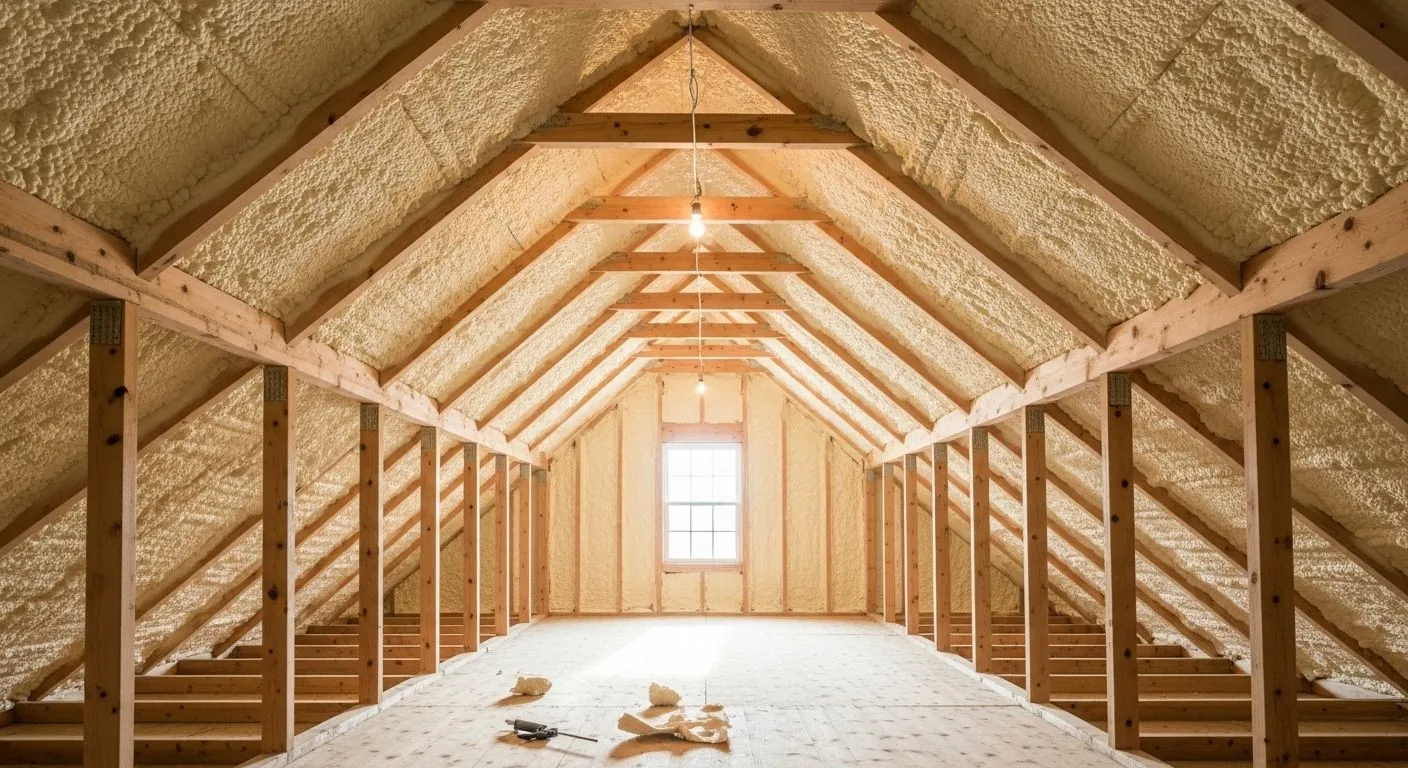
Don't let damp Oregon mornings result in freezing floors or skyrocketing utility bills. As Tigard’s leading attic insulation contractor, Spray Foam Specialists transforms drafty, inefficient houses into cozy, energy-saving sanctuaries. Beyond slashing monthly costs, our insulation locks in consistent comfort and actively blocks the moisture and allergens specific to the Pacific Northwest. Invest in high-quality attic solutions today to secure your home’s long-term health and instantly upgrade your daily living environment.
Heat naturally rises, and in homes without adequate barriers, it escapes directly through the roof, resulting in higher energy bills. This phenomenon, known as the "stack effect," forces your HVAC system to work overtime, leading to unnecessary wear and tear. Professional attic insulation services address this critical energy loss by creating a thermal envelope that keeps warm air inside during winter and blocks radiant heat during summer.
Effective insulation requires more than just rolling out material; it demands a strategic approach to air sealing and thermal resistance. According to the U.S. Department of Energy, a properly insulated attic can reduce heating and cooling costs by 10% to 50%, depending on the home's current condition. Addressing the attic is the single most impactful step a homeowner can take to improve energy efficiency. By using advanced materials such as spray foam and blown-in cellulose, the boundary between the conditioned living space and harsh outdoor elements becomes a robust shield.
For homeowners seeking the highest level of performance, attic spray foam insulation offers a superior solution that combines high thermal resistance with an impermeable air seal. Unlike traditional materials that may leave gaps or settle over time, polyurethane spray foam expands upon application to fill every crack, crevice, and void in the roof deck or attic floor. This expansion process creates a monolithic barrier that effectively stops air leakage, which is a primary carrier of moisture and heat loss.
There are distinct types of polyurethane foam utilized depending on the specific structural needs of the residence. Closed-cell foam provides structural reinforcement and acts as a vapor barrier, which is particularly valuable in the wet Tigard climate. Open-cell foam offers excellent sound-dampening qualities and allows for some breathability while still stopping air movement. Both options adhere aggressively to wood substrates, ensuring that the insulation stays in place for the life of the home without sagging or shifting.
The effectiveness of any insulating material is measured by its R-value, which indicates its resistance to heat flow. A higher attic insulation R-value means better climate control and lower energy bills. In the Tigard Metro area, building codes and efficiency standards recommend specific R-values to handle the significant temperature differentials and moisture levels experienced throughout the year. Achieving these targets often requires a calculated combination of materials or a particular depth of application.
Blown-in insulation is a powerful choice for achieving high R-values, particularly in homes with existing wall cavities or irregular attic joists. Made primarily from recycled paper products treated with borate for fire and pest resistance, cellulose forms a dense blanket that significantly slows heat conduction. It settles around wiring, plumbing, and truss chords, minimizing thermal bridging where heat typically leaks through the wooden structure.
Moisture is the silent enemy of any home structure, especially in the Pacific Northwest, where weather is rainy and its frequent. Attic insulation experts understand that insulation is about more than just temperature; it is about moisture management. When warm, moist air from the living space meets the cold underside of a roof, condensation occurs. This leads to mold growth, wood rot, and degraded indoor air quality.
Correctly installed insulation prevents this warm air from reaching cold surfaces. By sealing air leaks and providing a sufficient thermal break, the potential for condensation is drastically reduced. This protection extends the lifespan of the roof structure and prevents the growth of mold spores that can trigger allergies and respiratory issues. The goal is to create a building envelope that breathes appropriately while staying dry and thermally stable.
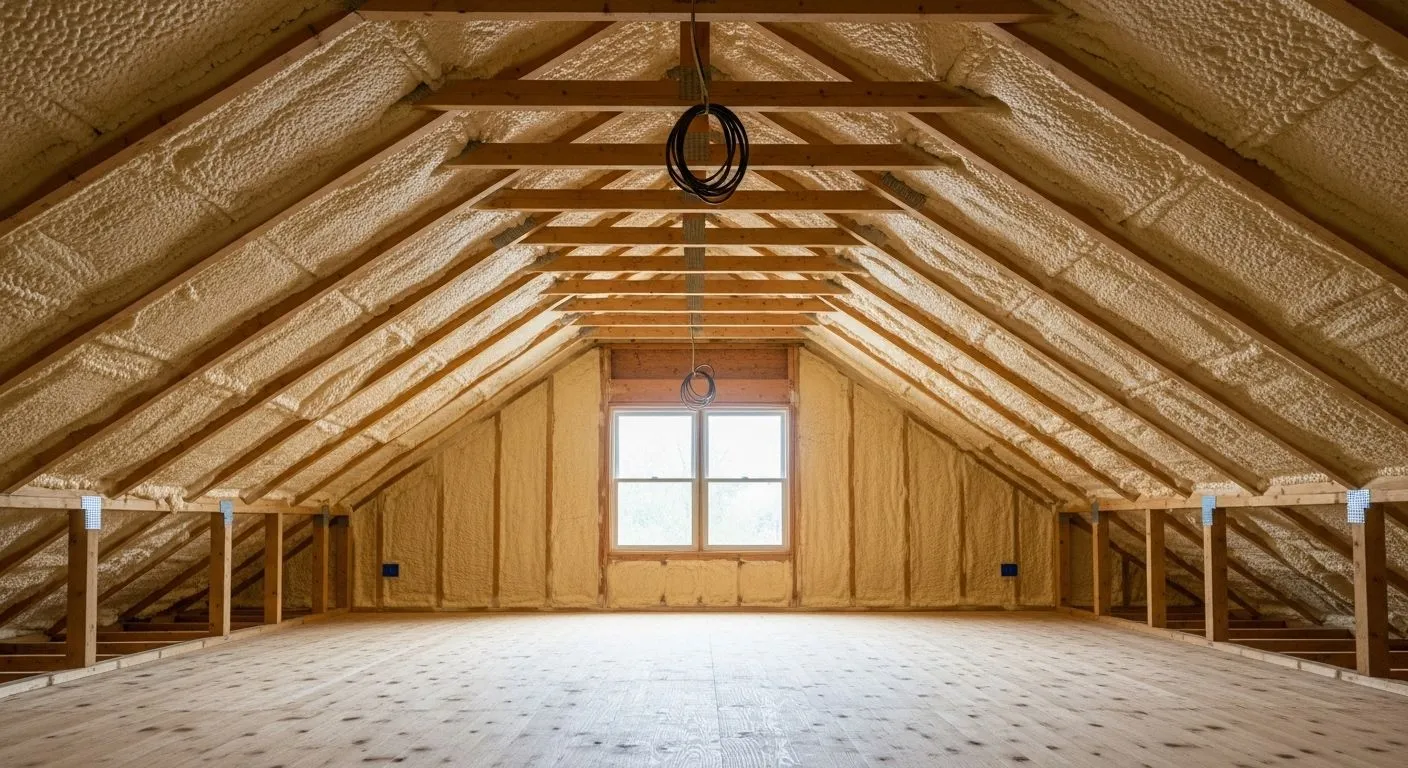
The difference between a mediocre job and a high-performance home lies in the skill of the application. Professional attic insulation installation requires specialized tools and a deep understanding of building science. The process begins with a thorough assessment of the existing conditions, identifying bypasses where air is leaking from the home into the attic, such as around light fixtures, chimneys, and plumbing stacks.
Removal of old, contaminated, or compressed insulation is often the first step, ensuring a clean surface for the new material. Whether applying blown-in cellulose or spray foam, the application must be uniform and continuous. Precision equipment is used to ensure the material is applied at the correct density and thickness to meet the desired R-value. Safety protocols, including proper ventilation and protective gear, are strictly adhered to during installation to ensure the safety of occupants and technicians.
Investing in professional insulation yields immediate and long-term returns. Beyond simple temperature control, the advantages touch on various aspects of home ownership and livability.
According to the U.S. Department of Energy, a properly insulated attic can reduce heating and cooling costs by 10% to 50%, depending on the home's current condition.
Feature | Spray Foam Insulation | Blown-in Cellulose |
Air Sealing | Excellent (Expands to seal gaps) | Good (Dense packing reduces airflow) |
Moisture Barrier | High (Closed-cell acts as a vapor barrier) | Moderate (Requires a separate vapor barrier) |
R-Value per Inch | High (R-6.0 to R-7.0 for closed cell) | Moderate (R-3.2 to R-3.8) |
Sound Proofing | Good | Excellent |
Longevity | 80+ Years | 20-30 Years |
Tigard's climate presents unique challenges that generic solutions fail to address. The combination of high humidity, rainy weather, and occasional freezing temperatures requires insulation strategies that prioritize moisture control. Standard fiberglass batts often fail in this environment because they can trap moisture and sag, rendering them ineffective.
In the Tigard area, focusing on air sealing is just as critical as the R-value. The damp air must be kept out of the insulation material to maintain its thermal properties. Utilizing hydrophobic materials or properly treated cellulose ensures that the insulation performs effectively even during the wettest months. This local focus ensures that homes in Tigard and the wider metro region remain dry, rot-free, and energy-efficient regardless of the weather outside.
Stop letting your hard-earned money escape through your roof. Contact Spray Foam Specialists today to schedule your comprehensive attic assessment. Call (971) 777-7729 or email [email protected]
Most residential attic insulation projects are completed within one day, though larger homes or those requiring significant removal of old insulation may take up to two days.
For the Pacific Northwest climate zone, the recommended level is typically between R-38 and R-60 to ensure optimal energy efficiency and comfort.
Common indicators include unusually high energy bills, uneven temperatures between different rooms, drafts, or physical signs such as moisture damage, mold, or pest droppings in the attic space.
While results vary based on the home's current condition and local climate, the EPA estimates that homeowners can save an average of 15% on heating and cooling costs by properly sealing and insulating their attics and crawl spaces.
Under ideal conditions, fiberglass and mineral wool insulation can last 80 to 100 years, effectively the life of the home. However, cellulose may degrade or settle after 20 to 30 years, requiring a "top-up," while spray foam is highly durable and can last indefinitely unless physically damaged.