

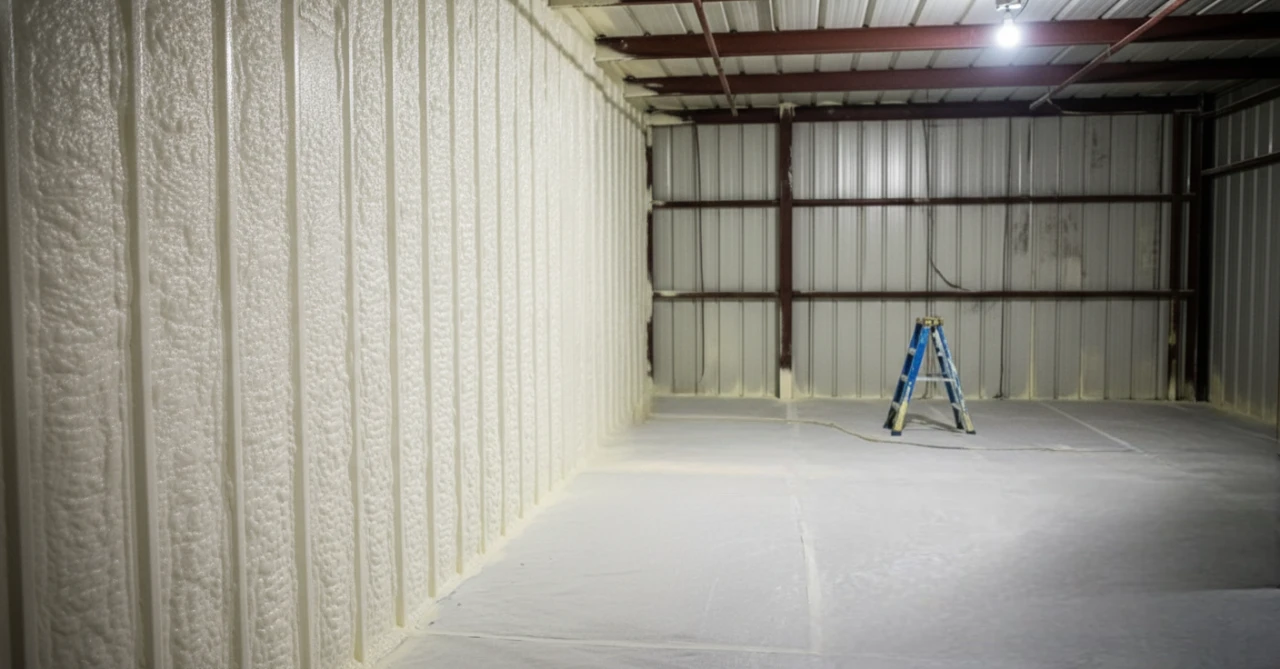
Spray foam insulation works by expanding liquid chemicals that create an air-sealing barrier when applied to surfaces, providing both thermal insulation and air infiltration prevention in a single application. In Beaverton’s climate, this dual-action capability makes it particularly effective for maintaining indoor comfort and reducing energy costs throughout the year. This article will explain the complete process, from application to performance benefits, with specific attention to local building conditions and climate requirements. The information comes from years of hands-on installation experience across hundreds of homes in the Portland metropolitan area.
When spray foam insulation is applied, two chemical components mix at the nozzle and react to form expanding polyurethane foam. This reaction happens in seconds, with the foam expanding up to 100 times its original volume before hardening into a solid cellular structure. The resulting material contains millions of tiny closed cells that trap air, creating excellent thermal resistance. Simultaneously, the foam fills gaps, cracks, and voids that traditional insulation materials cannot reach, forming an airtight seal that prevents air leakage.
The two main chemical components are isocyanate and polyol resin. When mixed, they create an exothermic reaction that produces carbon dioxide gas. This gas forms the bubbles in the foam, while the polymer matrix solidifies around them. Different formulations result in either open-cell or closed-cell foam, each with distinct properties suited for specific applications in Beaverton homes.
Spray foam insulation comes in two primary forms, each serving different purposes in home insulation projects. Understanding these differences helps determine the right choice for specific areas of a home in Beaverton’s climate zone.
Closed-cell spray foam has a dense structure with completely sealed cells, giving it higher R-value per inch (approximately R-6.5 to R-7) and superior moisture resistance. This type doesn’t absorb water, making it ideal for areas prone to moisture like crawl spaces, basements, and exterior walls. The dense structure also adds structural strength to walls and can help reduce sound transmission. In Beaverton’s wet climate, closed-cell foam provides an effective moisture barrier when properly installed.
Open-cell spray foam has interconnected cells that are not completely sealed, resulting in a softer, more flexible material with lower R-value per inch (approximately R-3.5 to R-4). It’s more affordable and expands significantly more than closed-cell foam, making it excellent for filling large cavities and hard-to-reach areas. While it doesn’t provide a moisture barrier, it still offers excellent air sealing properties and works well in interior applications like attics and interior walls.
| Property | Closed-Cell Foam | Open-Cell Foam |
|---|---|---|
| R-Value per inch | 6.5-7.0 | 3.5-4.0 |
| Moisture resistance | High | Low |
| Expansion ratio | 30:1 | 100:1 |
| Density (lb/ft³) | 1.5-2.0 | 0.5-0.8 |
| Cost per square foot | Higher | Lower |
| Best applications | Exterior walls, crawl spaces, below grade | Attics, interior walls, soundproofing |
Beaverton’s climate presents specific challenges that make spray foam insulation particularly advantageous. Located in Climate Zone 4C according to the International Energy Conservation Code, the area experiences mild, wet winters and relatively dry summers. According to data from the National Oceanic and Atmospheric Administration, Beaverton receives approximately 37 inches of rainfall annually, with average winter temperatures hovering around 40°F.
These conditions create two primary insulation challenges: managing moisture infiltration and preventing thermal bridging during cool, damp winters. Spray foam addresses both issues effectively. The air sealing properties prevent moisture-laden air from entering building cavities, while the high R-value reduces heat loss through walls and ceilings. Local building codes require specific R-values for different applications, and spray foam often achieves these requirements with less thickness than traditional materials.
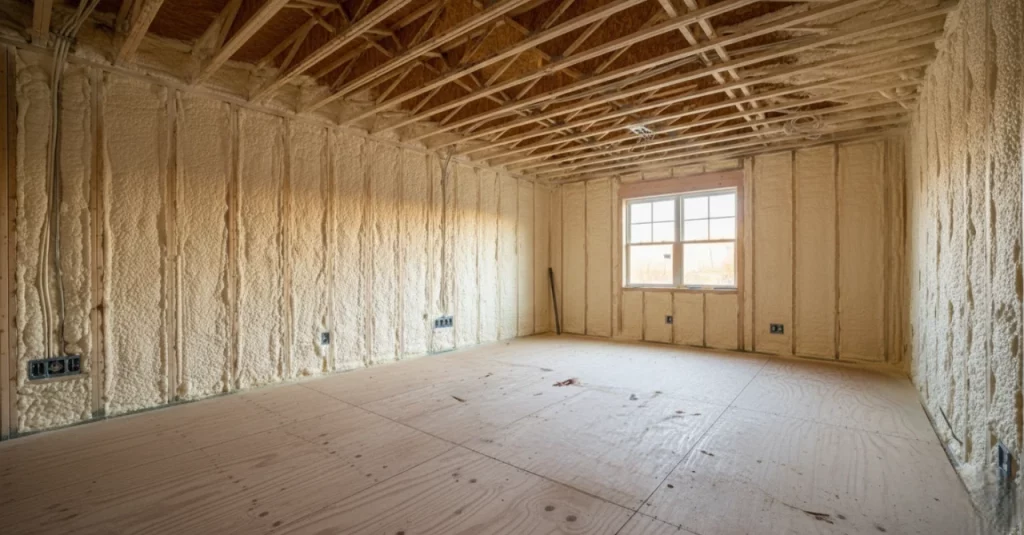
Before choosing spray foam insulation for a Beaverton property, several factors require careful evaluation to ensure optimal performance and cost-effectiveness.
Spray foam insulation requires specialized equipment and trained installers for proper application. DIY kits are available for small projects, but full home insulation demands professional expertise. The installation involves preparing surfaces, controlling temperature and humidity during application, and ensuring proper curing conditions. In Beaverton, the damp climate requires special attention to moisture control during installation to prevent foam defects.
Bonus Tip: The best time to install spray foam in new construction is after rough-in inspections but before drywall installation. For retrofit projects, spring and fall typically offer ideal weather conditions in the Beaverton area.
Spray foam insulation typically costs 2-3 times more than traditional fiberglass insulation upfront. However, energy savings of 30-50% are common, with payback periods often ranging from 3-7 years depending on the scope of the project and local energy costs. A study by the U.S. Department of Energy indicates that proper air sealing can reduce heating and cooling costs by up to 15% in moderate climates like Oregon’s.
Not all homes are equally suited for spray foam insulation. Older homes with existing moisture issues, improper ventilation, or structural problems may need repairs before installation. Properties with vapor retarders in unexpected locations require careful assessment to avoid trapping moisture between barriers.
Bonus Tip: A blower door test before insulation can identify major air leakage points and help prioritize areas needing the most attention, ensuring the most effective use of insulation budget.
Bonus Tip: Request Material Safety Data Sheets (MSDS) from any installer and verify they’re using modern, low-VOC formulations approved for residential use.
In most cases, spray foam can be applied over existing insulation, but it’s not always the best approach. For attics, spray foam applied to rafters often works better than adding it to existing floor insulation. This creates a conditioned attic space and eliminates thermal bridging through ceiling joists. For walls, removal of existing insulation may be necessary to ensure proper coverage and avoid trapping moisture between materials.
Spray foam insulation offers significant advantages for Beaverton homes through its combination of air sealing and thermal insulation properties. The technology addresses the region’s specific climate challenges, particularly moisture management during wet winters. Success depends on proper material selection, professional installation, and integration with appropriate ventilation systems. Homeowners should evaluate their specific needs, budget constraints, and existing building conditions before proceeding. A thorough energy audit can help identify priority areas and calculate potential savings, ensuring the investment in spray foam delivers maximum comfort and efficiency benefits.
For specific questions about spray foam insulation applications in Beaverton homes, SPRAY FOAM SPECIALISTS provides detailed assessments and technical guidance. Property owners can reach out by emailing [email protected] or calling (971) 777-7729 to discuss their insulation needs and request evaluations for their specific situations. SPRAY FOAM SPECIALISTS offers comprehensive consultations covering material selection, installation requirements, and expected performance outcomes based on local climate conditions.
Beaverton follows Oregon’s state building code, which requires minimum R-values of R-49 for attics, R-21 for walls, and R-30 for floors over unconditioned spaces. Spray foam achieves these requirements with less material thickness compared to traditional insulation.
Spray foam’s air sealing properties can affect natural ventilation patterns. Modern building science recommends mechanical ventilation systems in well-sealed homes. Energy Recovery Ventilators (ERVs) or Heat Recovery Ventilators (HRVs) maintain indoor air quality while minimizing energy loss.
In areas with radon concerns, spray foam can help reduce radon entry points by sealing foundation cracks and gaps in concrete. However, it should not replace proper radon mitigation systems in high-risk areas. Beaverton has moderate radon potential in some neighborhoods, making both approaches valuable.
While the chemical production has environmental impacts, spray foam’s energy-saving benefits over its lifetime often outweigh initial carbon footprint. Some manufacturers use recycled content or bio-based polyols to improve sustainability. The long service life means less material ends up in landfills compared to insulation that needs replacement.