

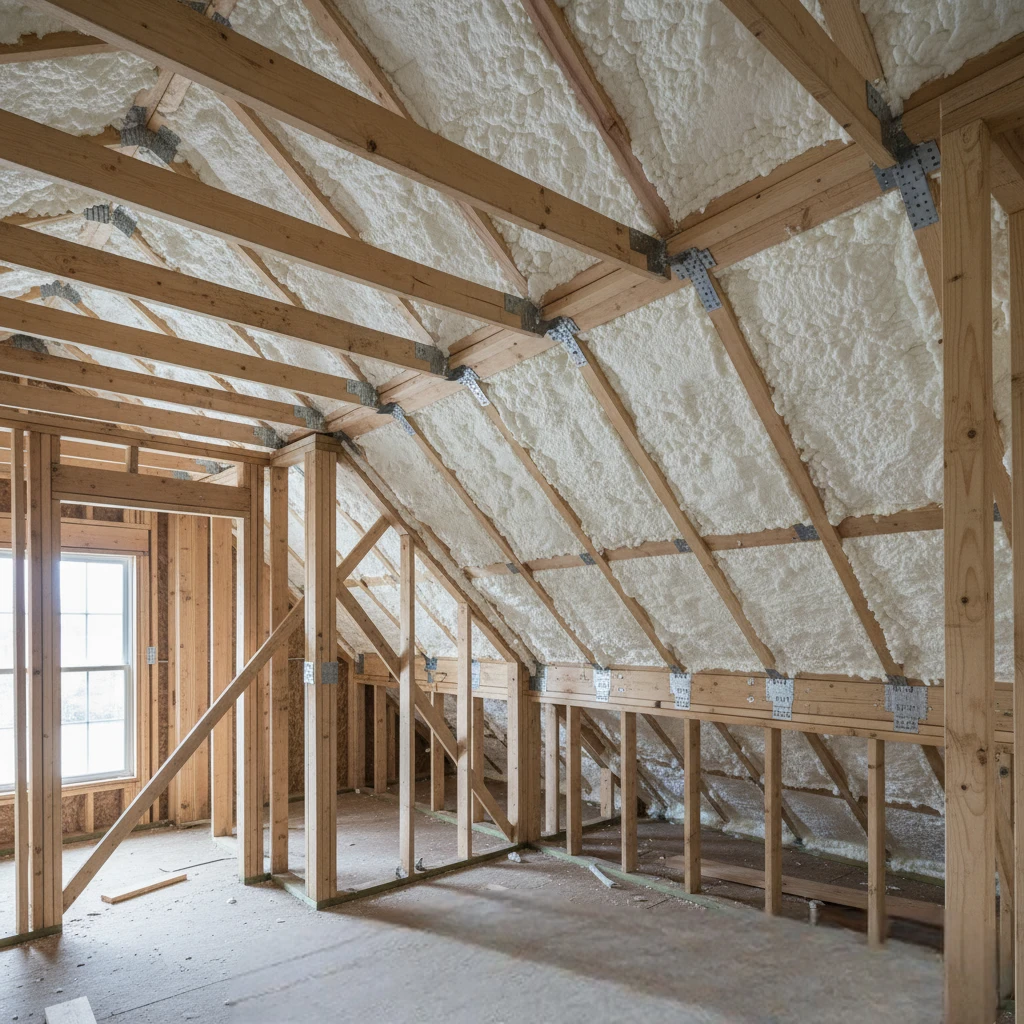
Spray foam insulation stands out as the superior choice for oddly shaped spaces because it expands on contact to fill every gap, crack, and void, creating a complete thermal barrier that traditional insulation materials cannot match. This unique expanding property allows spray foam to conform to irregular geometries, tight corners, and complex architectural features without leaving gaps that compromise energy efficiency. The result is superior air sealing and thermal performance in spaces where batts, boards, or loose-fill insulation would fail to provide consistent coverage.
This article examines the technical advantages of spray foam for challenging insulation applications, drawing from extensive field experience in residential and commercial projects across the Pacific Northwest. Readers will gain practical knowledge about material properties, application methods, and performance metrics to make informed decisions about insulation solutions for their unique spaces.
Unlike rigid insulation boards or batt materials that require precise cutting and fitting, spray foam begins as a liquid that expands up to 100 times its original volume within seconds of application. This expansion drives the foam into every opening and irregularity in the substrate, creating a monolithic insulation layer that eliminates thermal bridging. The material adheres to virtually any building surface, including wood, concrete, metal, and plastic, making it suitable for diverse construction assemblies.
Two main types of spray foam serve different purposes in odd-shaped applications. Closed-cell spray foam offers higher R-value per inch (approximately R-6.5 to R-7) and acts as a vapor barrier, making it ideal for areas requiring moisture control. Open-cell spray foam provides lower R-value per inch (approximately R-3.5 to R-4) but offers better sound dampening and is more flexible for filling very irregular spaces without excessive pressure on surrounding materials.
The following table demonstrates how spray foam compares to other insulation options when applied to challenging geometries:
| Insulation Type | R-Value per Inch | Air Sealing Ability | Fitting Complex Shapes | Moisture Resistance |
|---|---|---|---|---|
| Closed-cell Spray Foam | 6.5-7.0 | Excellent | Expands to fill all voids | Acts as vapor barrier |
| Open-cell Spray Foam | 3.5-4.0 | Excellent | Expands to fill all voids | Vapor permeable |
| Fiberglass Batts | 2.2-3.8 | Poor | Requires precise cutting | Absorbs moisture |
| Rigid Foam Boards | 4.0-6.5 | Poor | Requires cutting and sealing | Varies by type |
| Cellulose Loose-fill | 3.2-3.8 | Fair | Settles over time | Absorbs moisture |
The U.S. Department of Energy reports that proper air sealing can reduce heating and cooling costs by an average of 15%, with spray foam providing the most comprehensive air barrier among insulation options. This performance advantage becomes even more significant in oddly shaped spaces where traditional materials leave unavoidable gaps and seams.
Cathedral ceilings present particular challenges due to their limited cavity depth and multiple rafters intersecting at various angles. Spray foam installs efficiently in these confined spaces, expanding between rafters to create continuous insulation without the compression issues that reduce fiberglass effectiveness. The material’s superior R-value per inch allows for higher thermal performance within the limited depth available in ceiling assemblies.
Bay windows, dormers, and cantilevers create thermal bridges where traditional insulation materials struggle to maintain continuous coverage. Spray foam seamlessly wraps around these projections, eliminating the heat loss pathways that commonly occur at the junction between the main wall and these architectural features. According to research from the Building Science Corporation, thermal bridging can account for up to 30% of heat loss in poorly insulated building assemblies.
Bonus tip: For areas with extreme irregularity or very deep cavities, consider a combination approach using closed-cell foam near the exterior for moisture protection and open-cell foam toward the interior for cost efficiency and sound dampening.
In the Pacific Northwest climate, the vapor barrier properties of closed-cell spray foam help manage moisture migration through building assemblies, particularly important in rainy conditions where humidity drives moisture toward interior spaces. The material’s resistance to water absorption prevents insulation degradation and mold growth, common problems with traditional insulation materials in damp climates.
SPRAY FOAM SPECIALISTS has observed that homes in the region with spray foam insulation typically show 20-40% reduction in heating costs compared to similar homes with conventional insulation, particularly in houses with complex rooflines, additions, or retrofit situations where achieving complete coverage with traditional materials proves difficult.
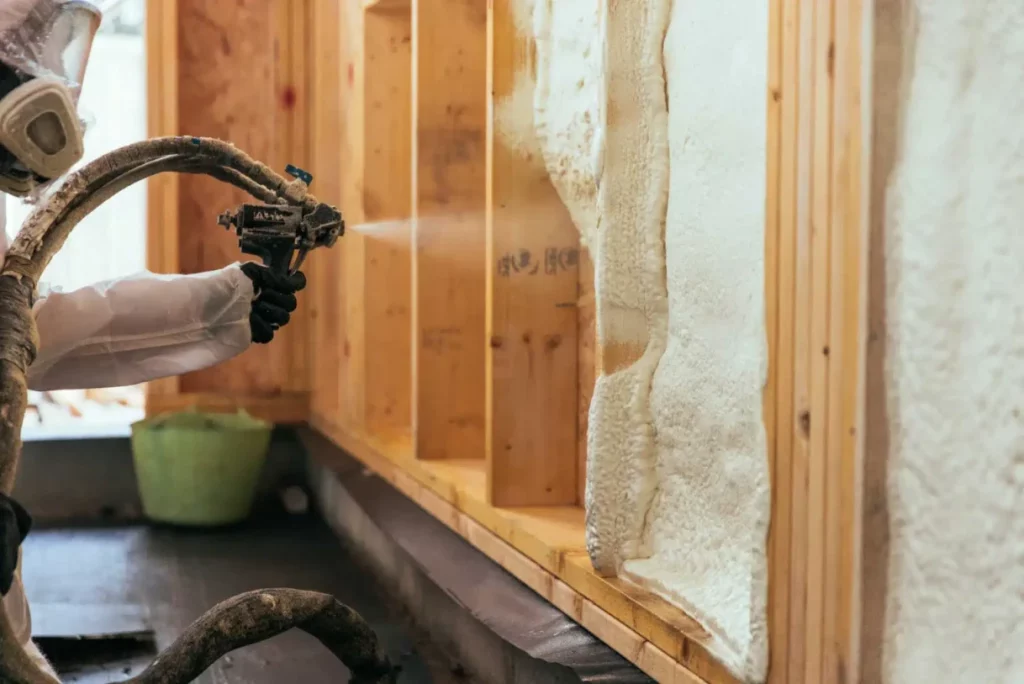
Before choosing spray foam for oddly shaped spaces, evaluate several critical factors that affect installation success and long-term performance. The substrate must be clean, dry, and free of loose debris to ensure proper adhesion. Temperature requirements vary by product, with most spray foams requiring surface temperatures above 40°F for optimal application.
Cost considerations extend beyond material price. While spray foam typically requires higher upfront investment than traditional insulation, the superior performance and longer lifespan often result in lower lifecycle costs. Material waste is significantly reduced since spray foam expands to fill exact cavity dimensions without cutting or trimming.
Professional installation is essential for achieving the promised performance benefits. Proper equipment calibration, application technique, and safety protocols require specialized training that exceeds typical DIY capabilities. Installation quality directly affects the final R-value, air sealing effectiveness, and longevity of the insulation system.
Bonus tip: When planning spray foam installation, coordinate with other trades to complete air sealing tasks simultaneously. Sealing electrical penetrations, plumbing chases, and framing gaps before foam application maximizes overall building performance.
Selecting spray foam for oddly shaped spaces offers clear advantages in thermal performance, air sealing, and moisture management compared to traditional insulation materials. The expanding properties create continuous insulation that eliminates gaps and thermal bridging in areas where other materials struggle to maintain coverage. While the upfront cost may be higher, the long-term energy savings, comfort improvements, and durability often justify the investment.
Before making a decision, evaluate the specific geometry of your project, climate conditions, and budget considerations. Professional consultation can help determine the appropriate type of spray foam and application method for your unique situation. The best insulation solution addresses both immediate performance needs and long-term building durability.
For professional guidance on spray foam insulation solutions for challenging spaces, SPRAY FOAM SPECIALISTS provides comprehensive assessment and installation services. The team can evaluate your specific project requirements and recommend appropriate insulation strategies. Contact them at [email protected] or call (971) 777-7729 to schedule a consultation and discuss how spray foam can address the unique insulation challenges in your property.
Yes, spray foam can be adapted for historic preservation projects. The minimal invasive application helps preserve original materials while dramatically improving energy efficiency. Conservation specialists often recommend spray foam for insulating irregular cavities in historic structures without compromising architectural integrity.
Closed-cell spray foam excels in cold climates due to its high R-value per inch and vapor barrier properties. The material resists moisture accumulation within wall assemblies, preventing frost damage and maintaining performance even in sub-zero temperatures. The continuous insulation eliminates cold spots common with traditional insulation in severe weather conditions.
In some retrofit situations, spray foam can be applied over existing insulation, but this requires careful assessment. The existing insulation must be dry and free of mold, and the assembly must accommodate the additional thickness without creating moisture problems. Often, removing old insulation provides better results for air sealing and overall performance.
Properly installed spray foam insulation typically lasts the lifetime of the building without degradation. The material resists settling, moisture absorption, and pest damage that commonly affect traditional insulation materials. Most manufacturers offer warranties of 25-50 years, though the actual lifespan often exceeds these periods.
Yes, buildings with spray foam insulation may require modified ventilation strategies. Since spray foam creates such an airtight envelope, mechanical ventilation becomes necessary to maintain indoor air quality. This typically involves heat recovery ventilators (HRVs) or energy recovery ventilators (ERVs) to provide fresh air without significant energy penalty.