

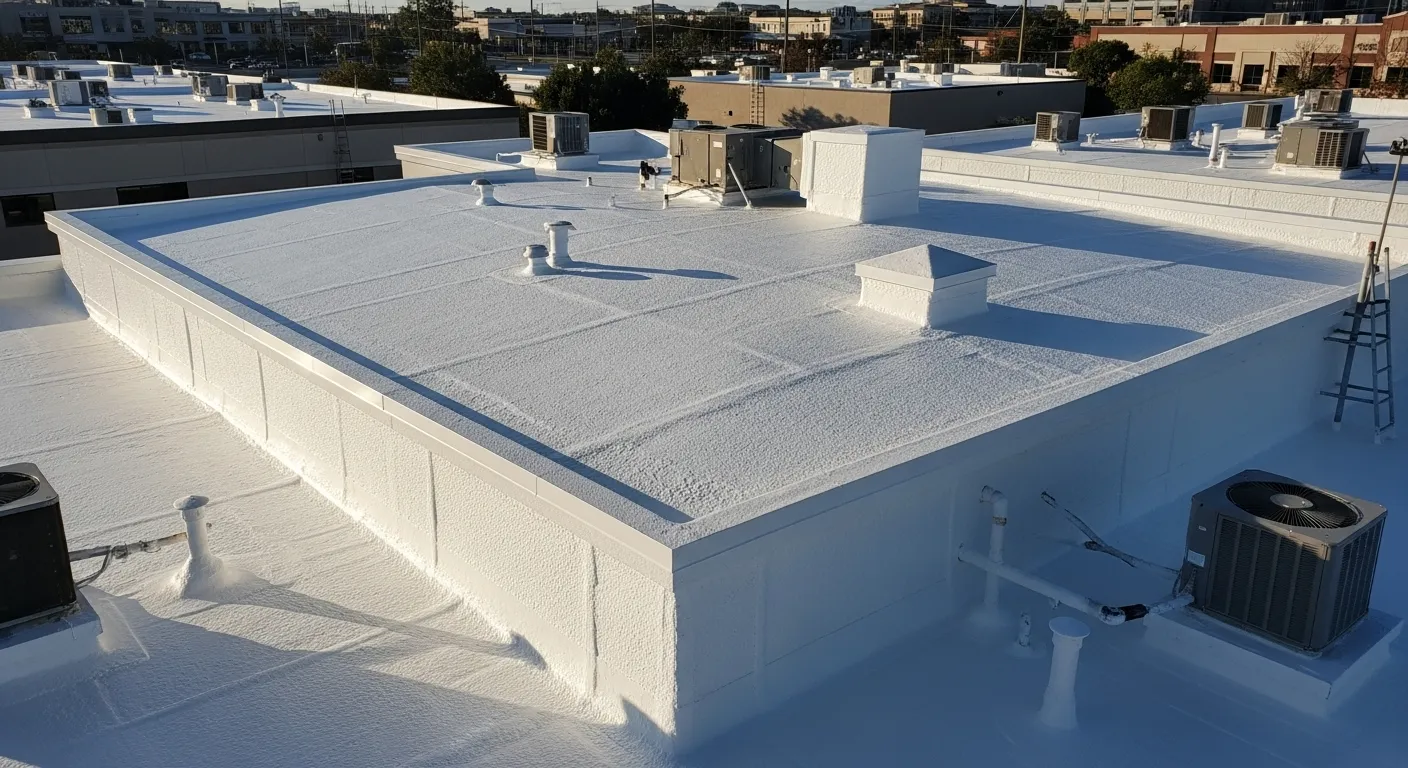
Experience total peace of mind during the heaviest downpours with commercial spray foam roofing insulation that guarantees seamless waterproofing and robust structural protection. By upgrading to high-performance spray foam, you transform your property into a fortress of energy efficiency, significantly reducing utility costs while mastering climate control. Secure your building today with the ultimate defense against leaks and weather vulnerability.
Property owners in the Tigard and surrounding areas can transform their industrial structures into sustainable assets that actively lower utility costs while providing unmatched protection against the persistent Pacific Northwest moisture.
Commercial buildings face constant threats from pooling water, UV degradation, and thermal expansion, but a professionally installed spray foam roofing system neutralizes these dangers. This technology uses a liquid mixture that expands significantly upon contact, forming a monolithic barrier that seals every crack, crevice, and seam in an existing structure. Unlike traditional roofing materials that rely on sheets and flashing, which eventually separate, this continuous layer eliminates the most common entry points for water leaks.
The application of this advanced material provides more than just a waterproof shield; it significantly reinforces the structural integrity of the roof deck. Industry statistics indicate that closed-cell spray foam can increase racking strength by up to 300%, adding a layer of rigidity that is crucial for large commercial spans. This dual-action performance makes it an intelligent investment for facility managers looking to solve immediate leakage issues while simultaneously upgrading the building's long-term durability.
Investing in spray foam insulation for roof applications offers a distinct advantage over traditional built-up roofing or single-ply membrane systems. The unique chemical composition of the foam allows it to conform to irregular shapes and seal around penetrations like vents, skylights, and HVAC units without the need for complex flashing details. This self-flashing capability reduces installation time and minimizes the risk of human error during the application process.
Beyond the installation benefits, the operational savings are immediate and substantial. The material's high R-value per inch provides superior thermal resistance, keeping interior spaces cooler in the summer and warmer in the winter without overburdening HVAC systems. By reducing the building's thermal load, property owners often see a drastic reduction in monthly energy costs, allowing the roof to pay for itself over time through utility savings alone.
Key Benefits:
Spray foam roofing offers exceptional adaptability, making it the premier choice for a diverse range of architectural structures across the region. Engineered to bond aggressively with virtually any substrate, this material creates a seamless, durable envelope that withstands the rigors of daily exposure. It is particularly effective for large-scale projects, where it seals vast surface areas against airflow and moisture infiltration. Whether applied to new builds or used to retrofit aging metal and concrete decks, spray foam provides a monolithic barrier that enhances structural integrity and weather resistance.
Common Applications:
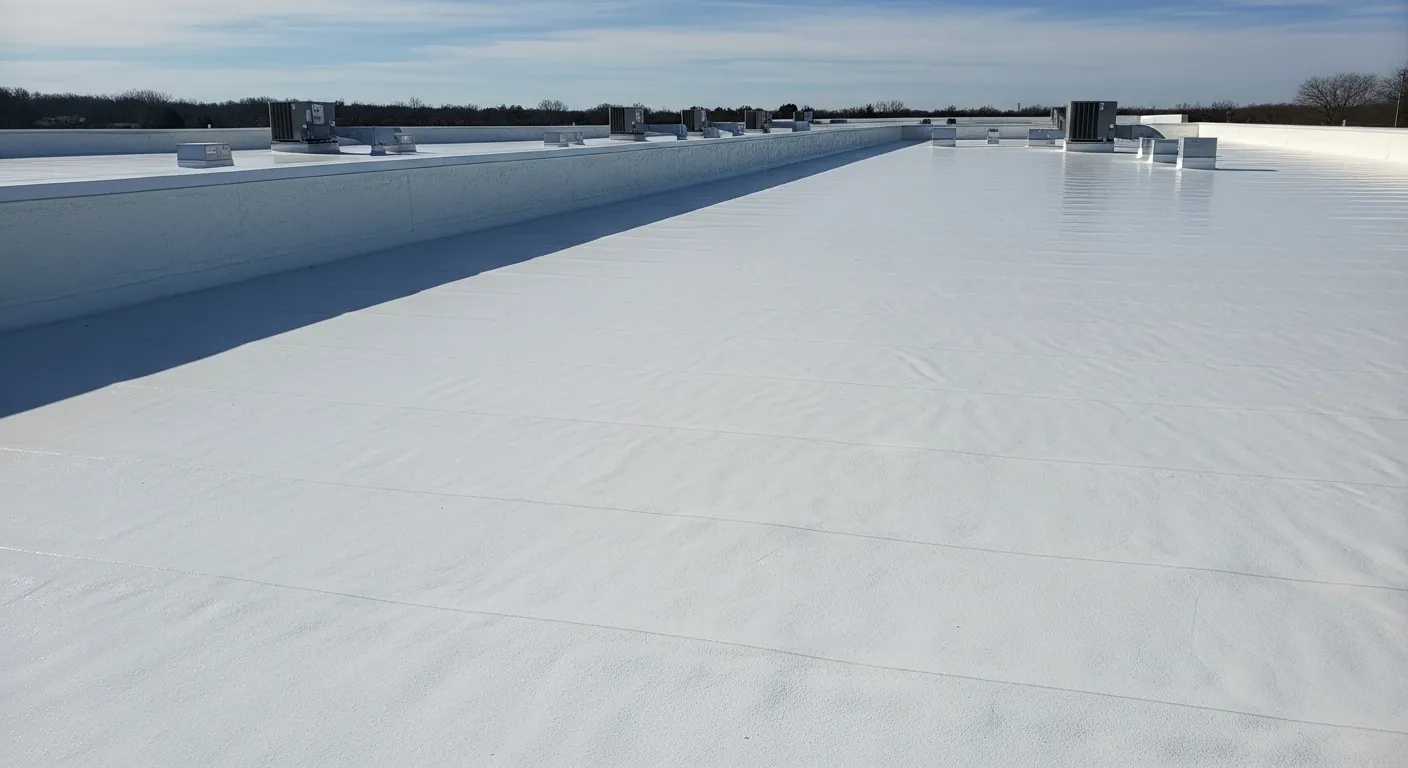
The foundation of this durable roofing system is Closed Cell polyurethane foam, a rigid, high-density material that serves a dual purpose as both thermal insulation and a primary waterproofing agent. Due to its impermeable nature, the foam functions as an effective air barrier and vapor retarder, mitigating the risks of internal moisture accumulation, mold propagation, and wood rot. To ensure system longevity, the foam is encapsulated by Elastomeric roof coatings. These UV-resistant topcoats protect the substrate from solar degradation and physical impact while offering high solar reflectance to improve overall energy efficiency.
Feature | Closed Cell Spray Foam | Traditional Insulation Board |
Seams | Seamless / Monolithic | Seams at every joint |
Waterproofing | 100% Water Impermeable | Can absorb water if breached |
Air Barrier | Complete Air Seal | Allows air movement |
Adhesion | Chemical Bond to Substrate | Mechanical Fasteners/Glue |
Flexibility | Rigid & Structural | rigid but brittle |
Selecting the right approach for your building requires expertise beyond what a general roofing and insulation contractor typically provides. Standard contractors often rely on prefabricated materials that must be cut and fitted, leaving room for gaps and thermal bridging. In contrast, specialized spray foam technicians manufacture the roofing system directly on-site, ensuring a custom fit that accounts for every unique contour and irregularity of the specific building.
This on-site manufacturing process allows for a level of quality control that pre-manufactured systems cannot match. The application team monitors temperature, pressure, and humidity in real-time to ensure the foam cures with optimal physical properties. This precision results in a roofing insulation system that delivers consistent performance and longevity, avoiding the common pitfalls associated with mechanical fasteners and glued seams used by generalists.
The Pacific Northwest presents unique challenges for building envelopes, particularly due to the high rainfall volume and fluctuating temperatures in the Tigard area. A spray foam roof is uniquely suited to handle these local conditions because it lacks seams that can expand and contract, creating leak points. In a climate where moisture intrusion is the leading cause of premature building failure, having a seamless, water-tight barrier is not just a luxury but a necessity.
Furthermore, the foam's insulating properties help regulate the building's internal temperature despite the region's common weather shifts. By preventing heat loss during damp, chilly winters and blocking heat gain during increasingly hot summers, this system ensures a comfortable internal environment for employees and inventory alike. The application provides a durable shield that stands up to the specific environmental stressors found in the local area, ensuring your investment remains secure season after season.
Don’t let an aging or inefficient roof put your building or operating costs at risk. Contact Spray Foam Specialists at (971) 777-7729 or email [email protected] to schedule an assessment and discuss a high-performance roofing system that helps protect your property and control energy costs.
With proper maintenance and regular recoating of the protective top layer, a spray foam roof can last indefinitely, often exceeding 30 to 50 years of service life.
Yes, high-density closed-cell foam is rigid and strong enough to support the weight of maintenance personnel and equipment without sustaining damage.
While initial costs are comparable to other commercial systems, the long-term energy savings and reduced maintenance requirements often make it the most cost-effective option over the roof's lifespan.
In most cases, yes, spray foam can be applied directly over existing substrates, which eliminates the cost and landfill waste associated with tearing off the old roof.
No, closed-cell spray foam is impermeable to water and will not absorb moisture, even if the protective coating is scratched or damaged.